The Ultimate Guide to Choosing the Right Web Development Framework in 2026
By Tzex Team
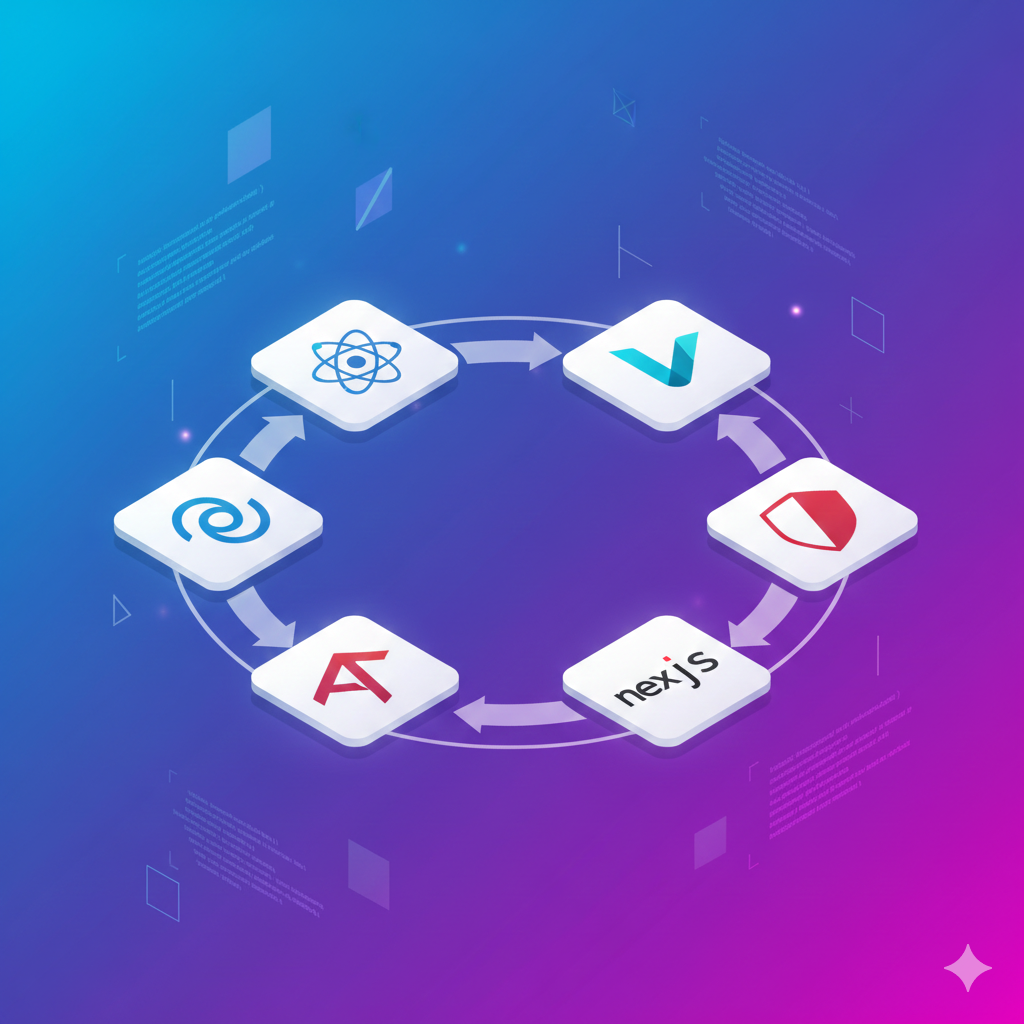
Choosing the right web development framework can make or break your project's success. With countless options available in 2026, businesses and developers face a critical decision that impacts everything from development speed to long-term maintenance costs.
Whether you're building a corporate website, e-commerce platform, or enterprise application, this comprehensive guide will help you navigate the modern web development landscape and select the framework that perfectly aligns with your business goals.
Why Your Framework Choice Matters More Than Ever
The web development framework you choose affects:
- Development timeline and costs – Some frameworks enable faster development than others
- Performance and user experience – Framework architecture directly impacts load times and interactivity
- Scalability potential – Your choice determines how easily your application can grow
- Developer availability – Popular frameworks have larger talent pools
- Long-term maintenance – Some frameworks require more ongoing investment than others
According to recent industry surveys, businesses that choose the right framework see 40% faster time-to-market and 35% lower development costs compared to those who make mismatched choices.
The Top Web Development Frameworks in 2026
Let's examine the leading JavaScript frameworks dominating the market:
1. React: The Industry Standard for Web Development
React continues its dominance as the most popular frontend framework in 2026, powering websites for Facebook, Netflix, Airbnb, and thousands of enterprises worldwide.
Key Strengths:
- Massive ecosystem with 200,000+ npm packages
- Component-based architecture enables code reusability
- Virtual DOM ensures exceptional performance
- Strong community support with extensive documentation
- Excellent for single-page applications (SPAs)
- React Native enables mobile app development with shared code
Ideal Use Cases:
- Complex, interactive web applications
- Projects requiring dynamic content updates
- Applications needing cross-platform mobile versions
- Teams with existing React expertise
Development Considerations: React offers tremendous flexibility but requires additional libraries for routing, state management, and other functionality. The learning curve is moderate, making it accessible for developers with solid JavaScript fundamentals.
Performance Metrics: Average load time for optimized React applications ranges from 1.5-3 seconds, with Time to Interactive (TTI) typically under 3.5 seconds on standard hardware.
2. Vue.js: The Progressive Framework
Vue.js has gained significant traction as a lightweight web framework that balances simplicity with powerful capabilities.
Key Strengths:
- Gentle learning curve ideal for beginners
- Excellent documentation in multiple languages
- Small bundle size (22KB gzipped)
- Flexible integration – works for both full apps and widget enhancement
- Reactive data binding simplifies state management
- Strong adoption in Asian markets
Ideal Use Cases:
- Small to medium-sized applications
- Projects with tight deadlines
- Teams transitioning from jQuery or vanilla JavaScript
- Applications requiring gradual framework adoption
Development Considerations: Vue's intuitive API and comprehensive official libraries (Vue Router, Vuex/Pinia) create a cohesive development experience. However, the ecosystem is smaller than React's, which may limit third-party component availability.
Performance Metrics: Vue applications typically achieve 20-30% smaller bundle sizes than equivalent React apps, with load times averaging 1-2.5 seconds for well-optimized projects.
3. Angular: Enterprise-Grade Web Development
Angular remains the go-to choice for large-scale enterprise applications requiring robust architecture and built-in features.
Key Strengths:
- Complete framework with batteries included (routing, forms, HTTP client)
- TypeScript-first approach enhances code quality
- Powerful CLI for scaffolding and optimization
- Dependency injection promotes testable code
- Strong corporate backing from Google
- Excellent for large teams with complex requirements
Ideal Use Cases:
- Enterprise web applications
- Projects with multiple developer teams
- Applications requiring strict coding standards
- Long-term projects needing stability
Development Considerations: Angular has the steepest learning curve among major frameworks but provides comprehensive solutions out of the box. The opinionated structure enforces best practices, making it ideal for large teams.
Performance Metrics: Initial Angular bundle sizes tend to be larger (150-200KB), but code splitting and lazy loading can optimize performance to 2-4 second load times for complex applications.
4. Next.js: React with Server-Side Rendering
Next.js has emerged as the leading React framework for production applications, offering server-side rendering (SSR) and static site generation (SSG).
Key Strengths:
- Exceptional SEO capabilities through SSR
- Automatic code splitting for optimal performance
- Built-in image optimization
- API routes enable full-stack development
- Incremental Static Regeneration (ISR) balances performance and freshness
- Edge runtime support for global performance
Ideal Use Cases:
- SEO-critical websites and e-commerce platforms
- Content-heavy applications
- Applications requiring fast initial page loads
- Projects needing both static and dynamic content
Development Considerations: Next.js builds on React, so React knowledge is prerequisite. However, it simplifies many complex tasks like routing, SSR configuration, and optimization.
Performance Metrics: Next.js applications with SSG can achieve sub-1-second load times, while SSR pages typically load in 1.5-2.5 seconds, significantly outperforming traditional SPAs for initial page loads.
Framework Comparison: Quick Reference Guide
FeatureReactVueAngularNext.jsLearning CurveModerateEasySteepModerateBundle SizeMediumSmallLargeMediumPerformanceExcellentExcellentGoodOutstandingSEO FriendlinessRequires workRequires workRequires workNativeDeveloper AvailabilityAbundantGrowingStrongGrowingBest ForComplex SPAsRapid developmentEnterpriseSEO-critical sites
How to Choose the Right Framework for Your Project
Consider these critical factors when selecting a web development framework:
1. Project Requirements and Complexity
Simple websites or MVPs: Vue.js or Next.js with static generation Complex SPAs: React or Vue.js Enterprise applications: Angular SEO-critical projects: Next.js or Nuxt (Vue equivalent)
2. Team Expertise and Resources
Evaluate your development team's current skills. Leveraging existing expertise accelerates development and reduces training costs. If hiring new developers, React's larger talent pool may offer advantages.
3. Performance Expectations
For applications where every millisecond matters – such as e-commerce platforms where studies show 1-second delays reduce conversions by 7% – prioritize frameworks with superior performance optimization capabilities.
4. Long-Term Maintenance and Scalability
Consider your 3-5 year roadmap. Will the framework support your growth? Is the community active and sustainable? Major companies backing frameworks (Meta for React, Google for Angular) provide stability assurance.
5. Development Timeline and Budget
Faster development frameworks like Vue.js can reduce initial costs, while more structured frameworks like Angular may increase upfront investment but reduce long-term maintenance through enforced best practices.
Emerging Trends in Web Development Frameworks
As we progress through 2026, several trends are reshaping modern web development:
Server Components: React Server Components and similar innovations are blurring client-server boundaries, enabling better performance and simpler data fetching.
Edge Computing Integration: Frameworks increasingly support edge runtime, deploying code closer to users for reduced latency.
AI-Assisted Development: Framework tooling now incorporates AI suggestions for component optimization, accessibility improvements, and performance enhancements.
Micro-Frontend Architecture: Large applications are increasingly built as composable micro-frontends, often using different frameworks for different sections.
Common Framework Selection Mistakes to Avoid
Many businesses make costly errors when choosing web frameworks:
Following Trends Blindly: The newest framework isn't always the best choice. Established frameworks offer proven stability and extensive resources.
Ignoring Team Capabilities: Choosing a framework your team doesn't understand leads to technical debt and extended timelines.
Overlooking Ecosystem Maturity: Ensure your chosen framework has libraries and tools for your specific requirements.
Underestimating Migration Costs: Switching frameworks later is expensive. Choose carefully upfront.
Getting Started with Professional Web Development
Selecting the right web development framework is just the beginning. Successful implementation requires:
- Proper architecture planning
- Performance optimization strategies
- Security best practices
- Accessibility compliance
- Ongoing maintenance and updates
At TZEX, our experienced web development team has delivered projects using all major frameworks, helping businesses make informed technology choices that align with their goals and budget.
Conclusion: Making Your Framework Decision
There's no universally "best" web development framework – only the best choice for your specific needs. React offers flexibility and a vast ecosystem, Vue provides simplicity and speed, Angular delivers enterprise-grade structure, and Next.js excels at SEO and performance.
Consider your project requirements, team expertise, performance goals, and long-term vision. When in doubt, consulting with experienced web development professionals can save significant time and resources.
Ready to start your web development project with the perfect framework? The TZEX team is here to guide you through the decision process and deliver a solution that exceeds your expectations.
More from Our Blog
The Ultimate Guide to Choosing the Right Web Devel...
January 2, 2026 | Web Development
Choosing the right web development framework can make or break your project's success. With countles...
Read More
SEO Action Plan 2025: Practical Steps for Web Desi...
July 21, 2025 | SEO, Technical SEO, Core Web Vitals
SEO Action Plan 2025: Practical Steps for Web Designers & SEO ProfessionalsThe search landscape...
Read More
Best AI Tools for Marketers: ChatGPT, Jasper, Surf...
July 20, 2025 | Best AI Tools for Marketers
Best AI Tools for Marketers: ChatGPT, Jasper, Surfer & MoreArtificial intelligence is transformi...
Read More