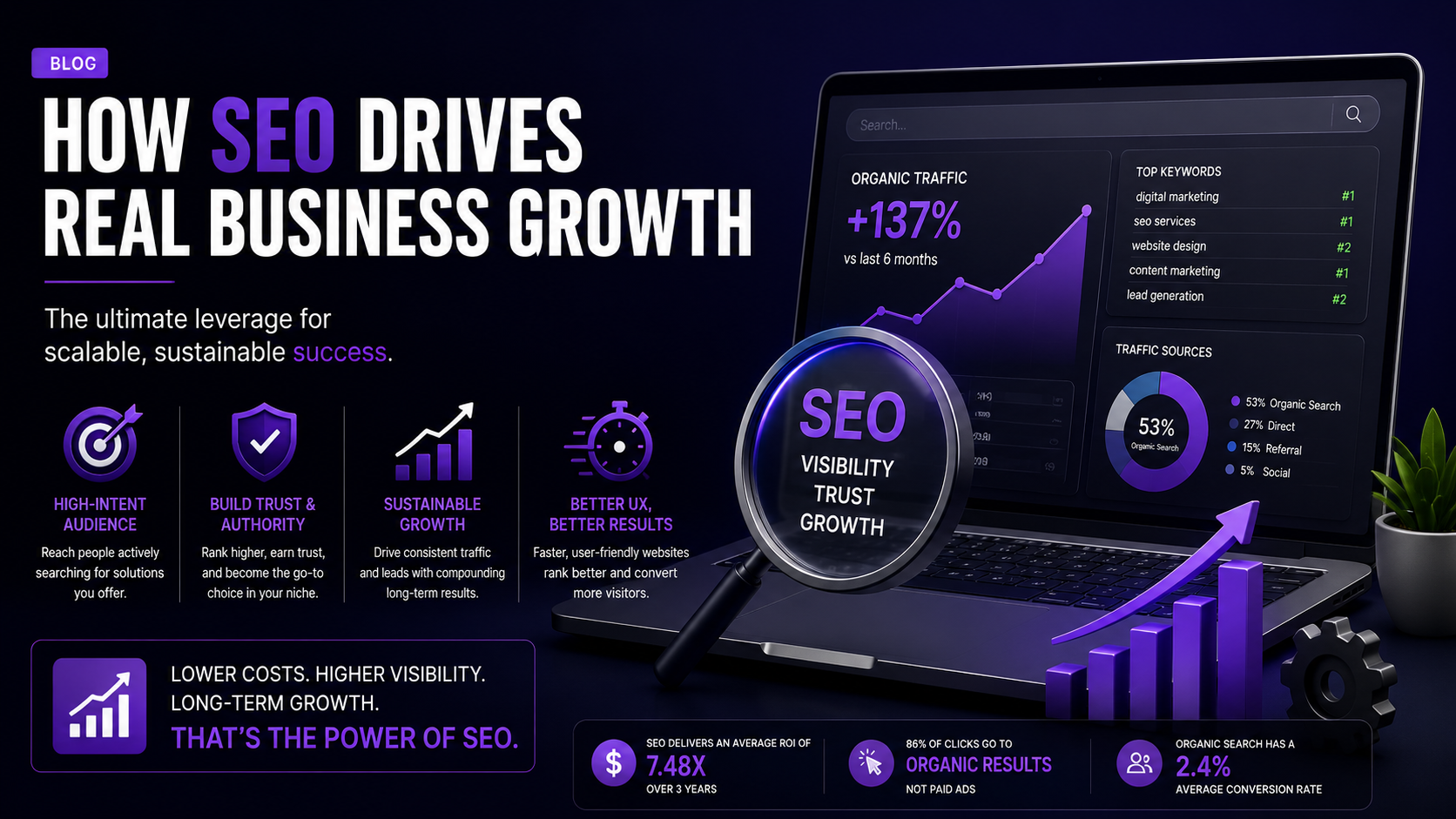
The Digital Tango: Why Web Design & SEO Must Dance Together for True Standout Success
In today's digital-first world, having a website is no longer enough. Every business, from startups to global enterprises, competes for attention in an increasingly crowded online marketplace. Yet many organizations still treat Web Design and Search Engine Optimization (SEO) as separate disciplines—one focused on aesthetics and the other on analytics.
This separation creates a costly gap. A visually stunning website that cannot be found in search engines generates little business value. Likewise, a website that ranks highly but delivers a poor user experience struggles to convert visitors into customers.
The most successful brands understand a simple truth: Web Design and SEO are not competitors—they are partners. Together, they create digital experiences that attract visitors, engage audiences, and drive meaningful business growth.
The Problem with Treating Design and SEO Separately
Imagine investing thousands of dollars into creating a beautiful website with elegant animations, stunning visuals, and a premium brand experience. Everything looks perfect—except your target audience never discovers it because the site lacks proper SEO foundations.
Now imagine the opposite scenario. Your website ranks on the first page of search results, but visitors immediately leave because the design feels outdated, confusing, or slow. Traffic arrives, but conversions never follow.
In both situations, businesses lose opportunities because one side of the equation is missing.
Modern digital success requires a balanced strategy where design and SEO work together from the very beginning.
1. The Invisible Foundation: Technical SEO
Every great website begins with a strong technical foundation.
Before users experience the visual design, search engines must be able to discover, crawl, and understand the website. This is where technical SEO plays a critical role.
A technically optimized website includes:
- Fast page loading speeds
- Clean website architecture
- Mobile responsiveness
- Optimized images and media
- Structured data and schema markup
- Secure HTTPS implementation
- Proper internal linking
According to numerous industry studies, users expect websites to load within seconds. Delays often lead to increased bounce rates and lost conversions.
Technical SEO ensures that the website performs efficiently, creating the perfect canvas upon which designers can build exceptional user experiences.
Why It Matters
A website's performance directly impacts both rankings and user satisfaction. Search engines reward websites that provide fast, accessible, and reliable experiences.
Without technical SEO, even the most impressive design struggles to reach its audience.
2. The Visual Hook: User Experience Drives Engagement
Once visitors arrive, design takes center stage.
A website's visual presentation determines whether users stay, explore, and ultimately take action.
Modern web design focuses on more than appearance. It influences behavior, trust, and decision-making.
Key Elements of Effective Design
- Visual Hierarchy: Guiding users toward important information and calls-to-action.
- Brand Consistency: Reinforcing trust through cohesive design elements.
- Readability: Making content easy to consume on all devices.
- Navigation Simplicity: Helping users find information quickly.
- Accessibility: Ensuring all users can interact with the website effectively.
Good design reduces friction. When visitors enjoy navigating a website, they spend more time engaging with content, exploring services, and completing conversions.
These positive behavioral signals indirectly support SEO efforts by demonstrating value and relevance to search engines.
3. Content: The Bridge Between Design and SEO
Content is where SEO insights and design creativity intersect.
SEO identifies what audiences are searching for, while design determines how information is presented and consumed.
Successful content strategies combine:
- Keyword research
- User intent analysis
- Compelling copywriting
- Engaging visual layouts
- Interactive media
- Clear calls-to-action
For example, a well-researched article may attract visitors through organic search. However, thoughtful typography, imagery, spacing, and content structure ensure readers remain engaged long enough to absorb the message.
The best-performing websites don't just answer questions—they create experiences around those answers.
4. Mobile-First Is No Longer Optional
Mobile devices now account for a significant portion of web traffic worldwide.
Recognizing this shift, Google primarily uses mobile versions of websites for indexing and ranking purposes.
This means businesses must prioritize mobile performance and usability.
A successful mobile-first strategy includes:
- Responsive layouts
- Touch-friendly navigation
- Fast mobile loading speeds
- Readable typography
- Optimized images
- Simplified user journeys
A poor mobile experience affects both search rankings and customer perception. Users often associate website quality with brand quality.
If a website feels frustrating on mobile, customers may assume the same about the business itself.
5. Conversion Optimization: Turning Visitors into Customers
Attracting traffic is only half the battle.
The true purpose of a website is to convert visitors into leads, customers, subscribers, or clients.
This is where design and SEO create measurable business outcomes.
SEO delivers targeted visitors actively searching for solutions. Design ensures those visitors understand the value proposition and feel confident taking action.
Examples of Conversion-Focused Design
- Strategically placed calls-to-action
- Trust badges and testimonials
- Clear contact forms
- Simple checkout experiences
- Persuasive landing pages
When traffic generation and user experience align, conversion rates naturally improve.
6. Building Long-Term Brand Authority
SEO and design together contribute to something even more valuable than traffic: brand authority.
When users consistently find useful content, enjoy smooth experiences, and trust a website's presentation, they begin to view the brand as a credible industry leader.
Authority leads to:
- Higher search visibility
- Increased referrals
- Greater customer loyalty
- Improved conversion rates
- Long-term business growth
Brands that dominate their industries rarely succeed through SEO or design alone. They excel because every element of their digital presence works together.
The Future: Integrated Digital Strategies Win
As artificial intelligence, voice search, personalization, and user experience signals become increasingly important, the gap between design and SEO will continue to shrink.
The businesses that thrive in the future will be those that stop viewing design and SEO as separate investments and start treating them as parts of a unified growth strategy.
Whether you're launching a new website or improving an existing one, the goal should be clear:
Create a website that search engines can understand and users genuinely love.
That is where sustainable digital success begins.
Final Thoughts
Your website is often the first interaction potential customers have with your brand. Every page, click, and search result contributes to their perception of your business.
When technical SEO provides visibility and thoughtful design creates memorable experiences, your website becomes more than an online brochure—it becomes a powerful growth engine.
The question is no longer whether you should invest in SEO or Web Design.
The real question is: Are they working together?
If not, you may be leaving significant opportunities on the table.
How does your business currently balance SEO and Web Design? Share your thoughts and experiences below.
Tags:
#WebDesign #SEO #DigitalMarketing #DigitalStrategy #UXDesign #UIUX #ContentMarketing #TechnicalSEO #MobileFirst #BusinessGrowth #SearchEngineOptimization #WebsiteDevelopment