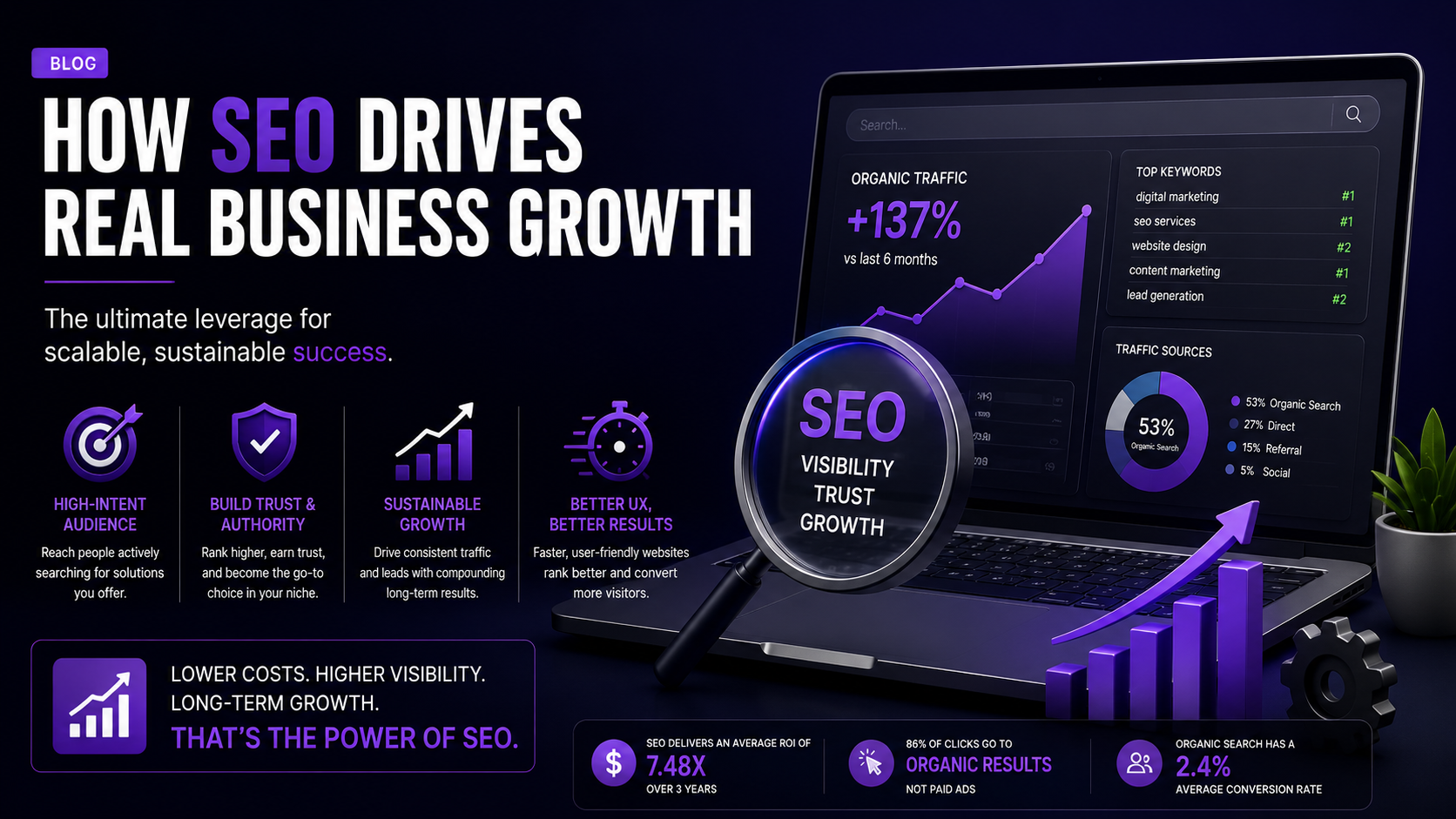
In the modern digital landscape, visibility isn't just an advantage—it is a baseline requirement for survival. With over 68% of all online experiences beginning with a search engine and organic search driving roughly 53% of all website traffic, Search Engine Optimization (SEO) has evolved from a technical afterthought into a fundamental driver of business growth.
For modern enterprises and fast-growing brands, SEO acts as a compounding digital asset. Unlike paid advertising, which stops generating leads the moment you turn off the budget, an effective SEO strategy continues to attract, engage, and convert high-intent audiences long after the content is published. Here is a look at exactly how SEO impacts a business’s bottom line and why it remains the ultimate leverage for scalable growth.
1. Massive Cost Efficiency and Compounding ROI
The math behind customer acquisition has shifted dramatically. With paid advertising costs skyrocketing across major ad networks, businesses are burning capital just to maintain their current visibility. SEO offers a sustainable exit from this acquisition treadmill.
While traditional outbound marketing or paid search channels require ongoing cash injections for every single click, SEO operates on a compounding model. An optimized, high-authority article or landing page can rank at the top of search results for years, driving thousands of targeted visitors monthly at a near-zero marginal cost. Industry benchmarks show that every $1 invested in robust SEO returns an average of $7.48 over a three-year period—a return on investment that actually improves as your site builds authority.
2. Capturing High-Intent, High-Conversion Audiences
Most marketing channels rely on "interruption"—showing an ad to someone while they are browsing social media or watching a video. SEO relies on "intent." When a user types a query into a search engine, they are actively looking for a solution, a product, or information.
By optimizing your website for the specific terms your ideal customers are searching for, you position your business exactly at the moment of decision. This alignment explains why organic search traffic maintains an average conversion rate of 2.4%, outperforming both paid traffic (1.3%) and organic social media channels (0.7%). You aren't chasing leads; you are letting qualified leads find you.
3. Building Long-Term Credibility and Brand Trust
Modern consumers have developed a natural blindness to paid advertisements. In fact, organic search results capture roughly 86% of all clicks on a search engine results page, leaving a meager 14% for paid ads. Landing the number one organic spot on Google—which pulls in an average click-through rate (CTR) of over 27%—sends an immediate, psychological signal to the user that your business is a trusted authority in the space.
Furthermore, as search behavior evolves alongside conversational AI engines and chatbots, SEO ensures that your brand isn't just found on standard search pages, but is also cited, referenced, and recommended by AI assistants as a primary, trustworthy source of information.
4. Enhancing the Total User Experience (UX)
A major component of modern SEO is technical optimization—improving site architecture, ensuring complete mobile responsiveness, and maximizing page speed. Google’s algorithms heavily reward websites that pass Core Web Vitals thresholds because they guarantee a seamless user experience.
When you optimize your site's performance for search engines, you are simultaneously optimizing it for your human visitors. A fast, intuitive website keeps users engaged longer. Considering that every single additional second of page load time reduces conversions by an average of 7%, technical SEO directly protects your revenue by preventing users from bouncing to a faster competitor.
The Bottom Line: SEO is no longer just about ranking for keywords. It is about building a comprehensive digital infrastructure that lowers your customer acquisition costs, captures high-intent buyers, and establishes your business as an undeniable authority in your market.